
FIA to test closed cockpit designs
- Oct 25, 2015
- 2 min read
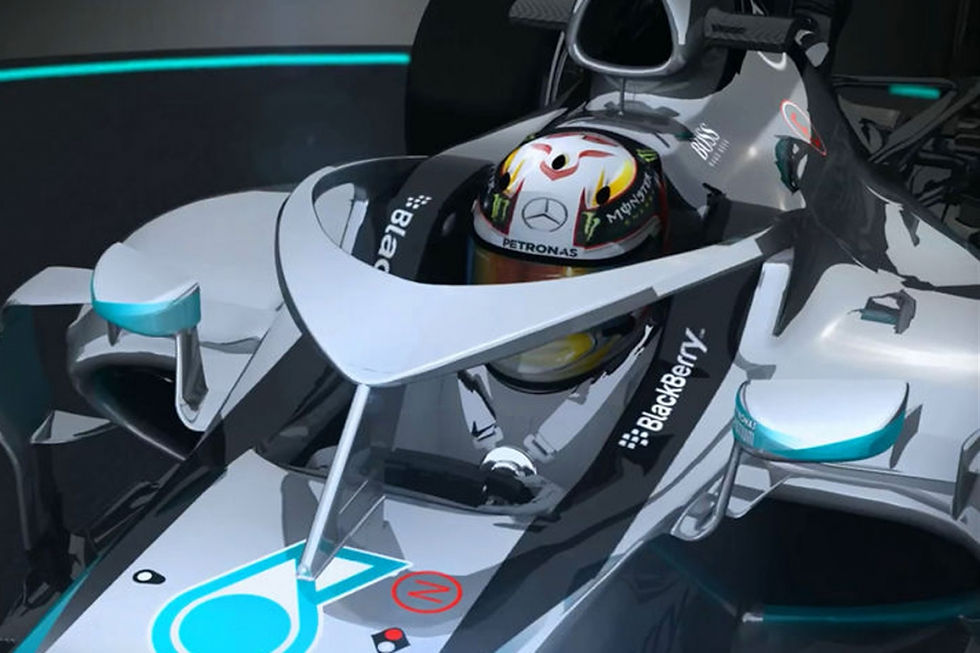
Following the tragic death of Justin Wilson in an IndyCar race at Pocono in August when a piece of debris struck his helmet, the FIA have been looking into closed cockpit designs to further improve the safety of motorsport, which Formula One is leading.
Fully enclosed cockpits were looked into after Jules Bianchi’s crash at Suzuka last year, but it was proven that it would not have reduced the impact with the recovery vehicle, and is now widely considered to not be the way forward.
The challenge the FIA face is improving safety without hindering visibility, or complicating the process of aiding a driver out of the car after a crash, particularly in cases whereby the seat is lifted out entirely if the driver’s back is injured.
Three new concepts are due to be tested next month, including the ‘halo’ design which Mercedes drew up when closed cockpit talks began to take place after Wilson’s death. Another concept is a centreline rollhoop made of three bars, running from the nose of the car to the air intake above the driver’s head.
The final design has been dubbed AFP-V2, which is a development on the rollcage on the nose of the car with blades jutting out to deflect debris. All three designs were presented at the driver’s briefing on the Friday of this weekend’s United States Grand Prix to keep them up to date on the governing body’s progress.
Alex Wurz, Chairman of the Grand Prix Driver’s Association, said: “You will see solutions that maybe aren't pretty, to be honest, but it's first about function and then we work on style. First we look at what we want to achieve and then I'm sure we will find solutions to extraction and other potential dangers.
"Of course, if you just look at flying objects then a canopy would still be the best solution - I prefer that - but then you have other issues to deal with such as fast extraction, fire.”
The designs will not be implemented until 2017 at the earliest, which could be the reasoning behind delaying the announcement of the regulation changes expected for after next season.
What will be introduced next year, however, is the mandatory high speed cameras, which Daniil Kvyat and Fernando Alonso have been running a prototype of this weekend. They have been fitted to the front of the cockpits and look back at the driver in order to study how a driver’s head moves during a crash. The idea was looked into after Alonso’s mysterious crash during pre-season testing, for which an explanation was never given.


Comments